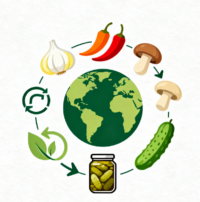
Understanding the Industry Behind the Ingredients.
We look beyond the product to understand how raw material, processing, specification, application and market requirements connect.
Industry knowledge is not a blog layer. It is part of how BRINEHARVEST evaluates and develops supply.
A product is more than its name. Form, processing, specification and intended application all matter.
Understand the ingredient beyond its name.
Preserved vegetable ingredients serve different food manufacturing applications. Understanding raw material characteristics, product forms, processing conditions and specifications helps buyers identify ingredients that match their production requirements.
Garlic Cloves in Brine
Garlic cloves in brine and salted garlic are used in sauces, condiments, marinades, prepared foods and further food processing. Buyers should evaluate clove size, uniformity, colour, texture, flavour, brine characteristics and packaging requirements.
Chilli Peppers in Brine
Chilli peppers are widely used in sauces, seasonings, condiments, pickled foods and prepared food products. Important considerations include pepper variety, size, colour, pungency, whole or cut form, texture and the intended processing application.
Mushrooms in Brine
Preserved mushrooms are suitable for consideration in soups, sauces, pizza toppings, ready meals and other food manufacturing applications. Buyers may evaluate mushroom variety, whole or sliced form, size, colour, texture and brine characteristics.
Gherkins in Brine
Gherkins and preserved cucumbers are used in pickles, relishes, sauces, sandwich ingredients and prepared foods. Relevant specifications may include length, diameter, firmness, colour, whole or cut format and the requirements of further processing.
Pickled Ginger
Preserved ginger is used in seasonings, sauces, marinades and various food preparations. Product form, cut size, texture, flavour and processing style should be considered according to the intended application. Salted ginger and crystallized ginger are different product categories.
Explore the questions behind the product.
International food ingredient sourcing involves more than selecting a vegetable and agreeing on a price. Processing, preservation, quality requirements, packaging and destination market regulations all influence purchasing decisions. Understanding these factors helps buyers communicate specifications and evaluate potential suppliers.
QUALITY & FOOD SAFETY →Brined vs. Pickled: Understanding the Difference
Brined and pickled vegetables may differ in processing methods, preservation ingredients, acidity and final product characteristics. Understanding the terminology helps buyers describe the required product more accurately and avoid confusion when communicating with suppliers.
PRODUCT KNOWLEDGESalt Concentration, pH and Product Stability
Salt concentration and pH are important parameters in evaluating many preserved vegetable products. Their significance depends on the processing method, formulation, storage conditions and applicable product specifications. Buyers should confirm relevant limits and testing requirements for each product.
TECHNICAL CONSIDERATIONSDesalination of Salted Vegetables
Some food manufacturing processes require salted ingredients to undergo desalination before further use. Washing, soaking, draining and processing conditions can influence the final salt level, texture and product performance. The appropriate procedure depends on the ingredient and the buyer’s production requirements.
PROCESSING KNOWLEDGEIndustrial Cut Sizes and Product Forms
Whole, sliced, diced, chopped and other cut formats can affect handling, production efficiency and the appearance of finished foods. Clear descriptions of dimensions, tolerances, shape and acceptable variations help buyers communicate their requirements more effectively.
BUYER SPECIFICATION GUIDECertificate of Analysis (COA): What Buyers Should Check
A Certificate of Analysis provides analytical information for a particular product or lot. Buyers should understand the reported parameters, test methods, units, acceptance criteria, sampling details and relationship to the agreed product specification. A COA should be reviewed together with other applicable quality and food safety documents.
QUALITY KNOWLEDGEBulk Packaging for Preserved Vegetable Ingredients
Packaging selection affects storage, transportation, handling and downstream production. Buyers should consider packaging material, net weight, product-to-brine ratio where applicable, storage conditions and destination handling requirements when discussing bulk supply.
SUPPLY CHAIN KNOWLEDGEFood Import Requirements and Market Considerations
Food import requirements vary between destination markets and product categories. Importers should check applicable regulations, permitted ingredients, microbiological and chemical requirements, labelling, documentation and customs procedures before confirming a shipment.
GLOBAL SOURCING INSIGHTHow to Evaluate a Preserved Vegetable Supplier
Effective supplier evaluation considers product capabilities, specification management, quality-control procedures, processing feasibility, packaging, export documentation and communication. Buyers should assess these factors against their own sourcing objectives rather than relying on product descriptions alone.
SOURCING KNOWLEDGETurn product knowledge into practical sourcing decisions.
A successful ingredient sourcing enquiry starts with clear product requirements. Connecting product form, technical specifications, intended application and commercial expectations helps establish a practical basis for discussion.
Identify the Product
Specify the vegetable ingredient you require, such as garlic, chilli peppers, gherkins, mushrooms or ginger. Identify the preferred product form, whole or cut format and intended food manufacturing application.
Define Specifications
Share available requirements for size, colour, texture, salt concentration, brine characteristics, processing style and applicable quality or food safety parameters.
Evaluate Feasibility
Product requirements should be reviewed against raw material characteristics, processing conditions, technical requirements and actual supply feasibility. Customized requests may require additional assessment.
Discuss Packaging
Consider bulk drums, pails or other agreed packaging formats. Communicate required net weight, estimated quantity, storage conditions and transportation considerations.
Have a product or processing question?
Tell us about the ingredient, intended application, product format and destination market. These details can help frame the next discussion.